
Childhood Education Innovations
Celebrating 100+ Years of Publication!
Do you want to expand your knowledge of early childhood care and education by learning about practices and initiatives from around the world? Subscribe today and receive Childhood Education Innovations magazine, the premier international magazine bringing you cutting-edge innovations and global perspectives in children’s care and education.
Childhood Education Innovations provides a unique, stimulating breadth of information about educational practices, approaches, programs, and initiatives from around the world.
Articles explore solutions to specific challenges affecting schools, teachers, and learners and showcase innovations being developed and implemented to address those challenges. Readers will find inspiration for transforming education to better serve children and their communities.
Published 6 times a year, Childhood Education Innovations provides a window into the work being done to bring quality, equitable education to all children and with a reasonable price of only $50 per year (online).
Childhood Education Innovations stands alongside our research journal — the Journal of Research in Childhood Education — as one of our signature publications.
Sneak Peek of the May/June 2026 Issue ArchivesSubmission Guidelines
March/April 2026 Contents:
 “Technology as the Enabler: Adapting Premium Pedagogy for Underserved Communities”
In healthcare, the highest quality care is often limited to those who can afford it or who live in countries with strong systems. Education faces a similar challenge. Many of the most exciting and effective approaches in early education are pioneered in schools with significant resources. Social-emotional learning, project-based learning, and multilingual classrooms take root where there is not only strong content, but also funding for teacher training, access to technology, and flexibility to adapt curriculum. These schools are valuable, because they act as testing grounds for innovation. But the real test isn’t whether an approach works in a privileged setting. It’s whether we can leverage technology so that these innovations reach every child, regardless of socio-economic status.
“Learning That Lights Up the World: Empowering Students to Fight for Energy and Climate Equity”
SolarBuddy is a global impact organization dedicated to ending extreme energy poverty and illuminating the futures of children everywhere. SolarBuddy has built a mission around two core goals: gifting durable solar devices to children living in energy poverty and educating and inspiring individuals worldwide to become agents of change. They combine sustainable-innovation, education, and community partnership to deliver solar lighting solutions and spread awareness about the impacts of energy poverty. Through the SolarBuddy STEM program, students build a child-friendly handheld solar light — and send it to a child living in energy poverty.
“Education for Happiness: Lessons From Finland”
The success and satisfaction of primary school teachers is dependent upon levels of preparedness, autonomy, engagement, and support. Students also need an environment that manages stress and anxiety, in which they can achieve academically and socially. In Finland, the priority for education is the happiness and well-being of each student, realized through high-quality educators, innovative assessment practices, and integration of play-based pedagogies. The positive results are reflected in Finland’s persistent happiness rankings, and top-notch academic achievement. Finland’s focus on students’ happiness provides meaningful insights for educators anywhere.
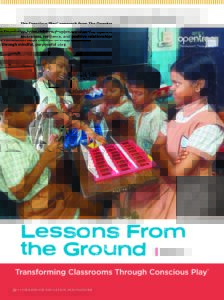
“Lessons From the Ground: Transforming Classrooms Through Conscious Play®”
The Opentree Foundation (TOF), a non-profit organization based in Maharashtra, India, has been championing play-integrated learning for over 20 years. Through its flagship initiative Toybank – Development through Play, and its scalable Conscious Play® approach, TOF impacts 200,000 children annually in under-resourced schools, providing them with the life skills they need to grow up in a world that is increasingly uncertain and complex. The Conscious Play® model is designed to be resource-sensitive and replicable, especially for underserved contexts. This is not a parallel system, it is a plug-in model that enhances what’s already there.
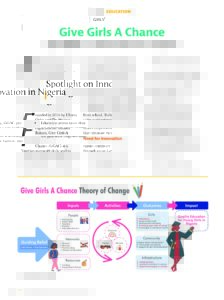
“Give Girls A Chance: Spotlight on Innovation in Nigeria”
Give Girls A Chance (GGAC) is a Nigerian nonprofit dedicated to breaking barriers that prevent girls from accessing and completing their education. In a country where 20 million children are out of school — and where girls are disproportionately excluded due to poverty, early marriage, and entrenched gender norms — GGAC was created to deliver a different kind of solution. With a holistic approach that secures education access and bridges it to livelihood opportunities, GGAC integrates vocational training, digital skills programs, entrepreneurship support, and inclusive opportunities for girls and women with disabilities, who face compounded barriers.
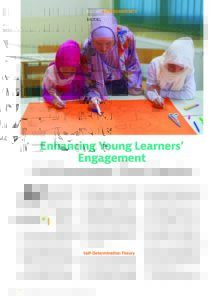
“Enhancing Young Learners’ Engagement: A Self-Determination Theory Perspective”
Self-determination theory emphasizes the importance of satisfying three basic psychological needs—autonomy (the need to feel in control of one’s actions), competence (the need to feel capable of achieving goals), and relatedness (the need to feel connected to and valued by others). When these needs are met, young children are more likely to experience a sense of well-being and engage in learning with intrinsic motivation. Conversely, when these needs go unmet, children may feel isolated, shy, and disengaged from the learning process. Teachers who create environments that nurture autonomy, competence, and relatedness are more likely to foster motivation, engagement, and positive learning outcomes in their students.
“Nurturing India’s Youngest Migrants: A Proposal for Early Childhood Innovation”
This article proposes leveraging the strengths of spiritual organizations in India to expand and innovate early childhood care and development services for migrant children. The framework presented here would introduce new service models and expand upon proven practices, envisioning a combination that could close critical gaps in access for urban migrant children under age 6. With a focus on well-being, innovation, and leadership, this proposed strategic framework could harness the strengths of India’s spiritual organizations to deliver high-quality early childhood services, closing education gaps and securing positive futures for these children.
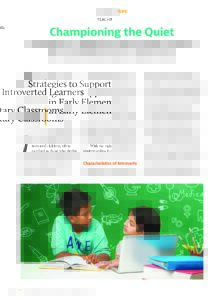
“Championing the Quiet: Strategies to Support Introverted Learners in Early Elementary Classrooms”
The article explores the various techniques executed by elementary teachers in a real classroom environment to make learning a joy for introverted children and help them participate. In-depth interviews were done with seasoned teachers who have had at least seven years of elementary-level experience. The teachers spoke about many successful, practical methods they have used over the years to make their classrooms more inclusive for introverted students. Eleven strategies are grouped under the four themes of inclusive engagement; positive reinforcement and feedback; supportive environment; and energetic, playful teaching style.
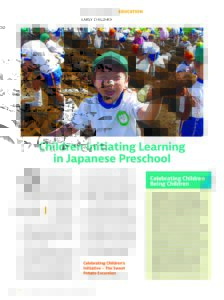
“Children Initiating Learning in Japanese Preschool”
Generally, Japanese teachers acknowledge that children learn and develop as individuals in the context of others. Through respectful and mutual relationships with children, teachers provide ample opportunities and time for them to interact with one another, initiate problem-solving by themselves, and engage in positive social-emotional relationships. A school excursion described here illustrates Japanese teachers’ belief that children are active and powerful learners who can initiate their own learning through play. They appreciate and celebrate children being children and nurture the attribute of playful learning.
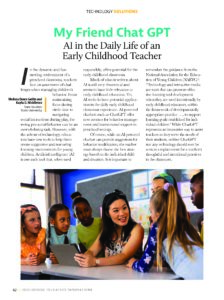
“My Friend Chat GPT: AI in the Daily Life of an Early Childhood Teacher”
With the advent of technology, educators have new tools to help them create supportive and nurturing learning environments for young children. Artificial intelligence (AI) is one such tool that, when used responsibly, offers potential for the early childhood classroom. Much of what is written about AI is still very theoretical and seems to have little relevance to early childhood education. Yet, AI tools do have potential application in the daily early childhood classroom experience. AI-powered chatbots such as ChatGPT offer new avenues for behavior management and instructional support in preschool settings.